
A few months ago, I had a genius idea. I was going to use AI to plan my meals! It was going to be amazing. I could just type in a prompt, let it know what I wanted to eat, and wah-lah, I was going to be set and not have to think about what I was making.
The first time was meh, so I gave it a little bit more information. No, I don’t want to eat tuna for every single meal. And then, there it was. The plan for the week.
After a back and forth, I was able to get a pretty good grocery list that I could pop into my notes app and organize for grocery shopping.
Then, it came to making the meals. Since I had generated it in AI, I had to save it somewhere else so I didn’t lose it when I closed the window. The meal plan and recipes ended up being stashed away in a random document, so when it came to the after-work-daycare-pick-up rush, I completely forgot about it because I needed to get something on the table ASAP.
The nights when I did remember that I had a meal plan, I would try the recipes that AI created. And well, yes, it did tell me to put together some meats and veggies, and usually a grain or noodle, but there was no flavor. It was like I was raiding my fridge for the last few ingredients the day before a grocery trip.
I ended up trying AI meal planning for a few weeks, but I eventually gave up on it. Yes, it checked the first few boxes of meal planning.
A weekly menu? Check. Built to my preferences? Yes. Recipes that fit with my life? Sort of.
But being able to execute it and rely on what it came up with? Not great. It ended up creating more stress for me than anything.
The Problem with AI-Generated Recipes
While AI will act like your best friend and tell you that it understands, it’s a machine.
It’s never fed a toddler at the end of the day.
It’s never had to juggle getting the dog outside while triaging a meltdown, and trying to get dinner started with your other hand, so the entire world didn’t explode with hanger.
It’s never heard a husband complain about “ugh, chicken again” while simultaneously fighting off demands for chicken nuggets from the kids.
So, the AI-generated recipes get you just so far. Just enough to feel a little sigh of relief. But then, when it comes to practice and you need to cook the meal, it falls short.
That’s because AI, or the technology that powers the popular platforms like Gemini, ChatGPT, and Claude, don’t have taste buds. They don’t understand flavor profiles or what that little extra ingredient may be to make a recipe delicious. They just know that sometimes, in other recipes or on other articles, these words tend to go together. So then it assumes that it would likely be good in a recipe it creates, too.
But, it’s never tested it. Add AI hallucinations to that challenge.
Because AI doesn’t hold the human perspective because it’s a machine, it can sometimes make up things to have an answer. Perhaps it says to bake something for 10 minutes, when you need 45 minutes because of the different ingredients that have come together. Or maybe it’ll tell you to add a bizarre ingredient that tastes terrible (tuna scrambled eggs, anyone?).
Lastly, great recipes come from real human beings who test and sample different variations to get it just right. Many of the amazing food bloggers have created recipes that required a great deal of work to get everything to work just right. They’ve tested the ingredients together, added a bit more or a little less, and created a dish that your family loves. AI doesn’t have the ability to do that.
The Truth of Who Pays for AI’s Mistakes
For many moms, using AI-generated recipes seems like a savior. Finally, something that’s easy and delivers just what I need, when I need it.
But then, it turns into a fake promise. A promise that it’s going to simplify things and make it so much easier to manage it all. But suddenly, you’re midway through a recipe realizing that it doesn’t make any sense – and everyone is hungry, so what are you supposed to do?
Once the trust breaks, moms might still rely on AI to generate recipes because they are exhausted by the other options they know. But, continuing to focus on it will require more monitoring. Looking at recipes closer to see what ingredients are needed. Thinking about how the flavors interact and whether it’s something that sounds good enough to feed the family.
There goes the benefit that AI promises: make it easier. Suddenly, the mental load is back. If anything, things feel more complicated because there’s an extra layer of trying to see what would work and not work, and then filling in the gaps with the dreaded recipe search.
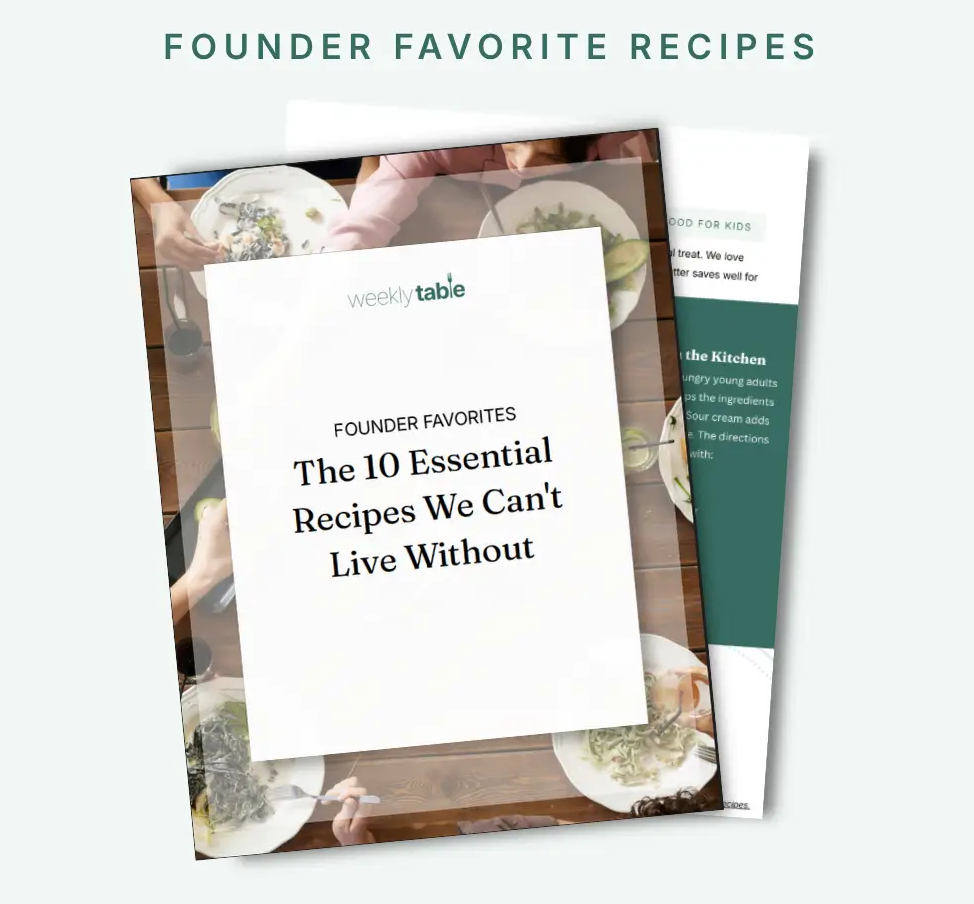
The Recipes We Can’t Live Without
An easy-to-download guide with our top 10 recipes. These are the recipes that get us through after a long day; the ones that our kids will eat.
Focusing on Recipes that You Can Trust
While Rosey in the Jetsons made it look like a robot could be a great addition to managing the mental load of a household, real-life parenting teaches us otherwise.
AI brings automation into our lives. While there are places where it can help, it typically falls apart when you need a human touch. Without realizing and internalizing the human experience, AI can create more work for those carrying the mental load (read: moms).
Intentional, reliable systems are the cornerstone for running a household in today’s world where families are busier than ever. AI can have a place in helping to automate the meal planning aspect, but based on the mom-tested, mom-approved recipes that you can trust. Because when the hanger is rising, you can’t risk falling short.
Here at Weekly Table, we’re two moms who were tired of the stress of figuring out what’s for dinner. That’s why we built Weekly Table.
Built for moms, by moms; Weekly Table gives you a meal plan that fits with your life. Whether you add your recipes or pull from our library of mom-tested, mom-approved options, your meal plan gets delivered each week so that you can focus on what matters most: connecting with those that you love.
Ready to end the stress of what’s for dinner? Start your free trial today.