
Our founders sat down for a special Q&A blog to highlight what spending more time with family means to each of them. Check out what Betsy and Lora had to say in this post!
When parents say they want to spend more time with family, they usually mean long weekends or vacations. Why do you think we’ve lost the ability to find that connection in the everyday spaces we already own—like the kitchen table?
Betsy: Looking back from when I grew up versus now, we’ve filled our lives with a lot of busy. When my kids were little, we had a fishing boat and spent our weekends together fishing and docked on the shore while they played in the water. One of our traditions was having ham and cheese roll-ups for lunch. Just so simple, but so memorable.
But then pee-wee football and cheerleading started, and we swapped those family moments for running to practices, rushing through dinners, and traveling for games. We even ended up selling the boat. Looking back, I realized I’d traded deep family connections for the daily hustle because I was worried they’d miss out. But, miss out on what?
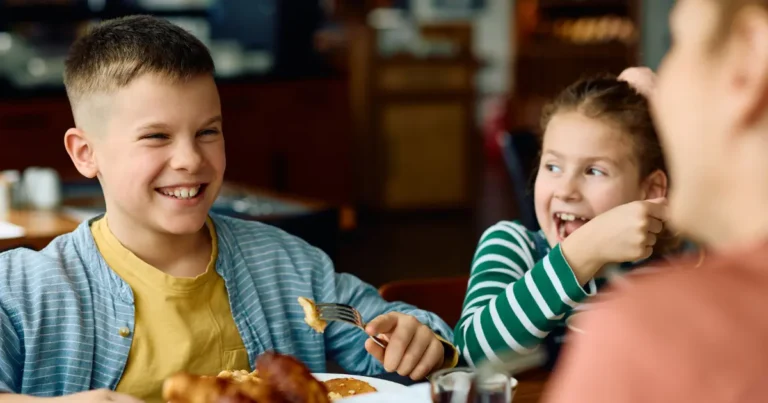
We’ve convinced ourselves we need these huge, picture-perfect vacations to connect. But, what we remember and enjoy the most are the simple moments. The traditions of food, or cooking together, or just laughing over dinner.
Lora: I think a lot of it stems from what we’re seeing on social media, the perfectly curated family doing the most fabulous things – and so it feels like the simple things don’t mean enough. But looking back on my childhood, it’s amazing how the most mundane things have become my favorite memories. (And somehow, most of them are centered on meals or food in some way).
You often talk about being able to finally connect at the kitchen table. What does this look like, and how does freeing making this a priority change up change the energy of the whole house?
Betsy: For me, it’s just sitting together with no distractions. Phones down, just enjoying each other and the food. My parents set this rule for us as we were growing up – we weren’t allowed to take their plate to the couch or their bedroom. Of course, I hated it as a teenager in particular – but I get it now.
Because of what we did as a family when I was young, I created those habits with my own kids early on. Today, it’s much harder to do it with all of the activities and busyness in our lives. If you’re trying to start this now, it’s probably going to feel awkward. Your kids are going to rebel, like most of the time when you set a boundary. You’ll probably get the heavy sighs, the eye-rolls, or the silent treatment at first. Stick with it. When you make it a priority, you stop rushing just to get the meal over with. You’re choosing to be together, and soon the tension melts away.
Lora: Habits and routines are what families thrive on (even those that say they don’t like routine, have a routine – it’s just different than what’s standard). And setting the kitchen table as the place for conversation and connection creates a habit that engrains in everyone in the family. It becomes a place of nurturing and comfort; and naturally, it extends to the rest of the home, too.
Let’s be real—the biggest barrier to sitting down together is the exhausting mental loop of ‘What’s for dinner?’ at 5 p.m. How does taking the friction out of meal planning directly allow a busy mom or dad to spend more time with family without feeling rushed?
Betsy: I’ve absolutely been there. You walk through the door at 5:00 p.m. with zero plans and ask, “What do you want for dinner?” One kid wants tacos, the other groans, or someone else says, “I don’t know.” Instantly, you’re irritated and stressed. Because we live in a small town, just ordering takeout isn’t an option. So, the scramble usually ended with cooking a frozen pizza or everyone going through the pantry for random snacks. When you meal plan, you’re giving your tired brain a break. The groceries are already there and the choices are made. You get to come home with a plan, which completely changes the energy you bring to the kitchen.
Lora: I live in the city and even with takeout as an option, sometimes it hits the same roadblock of not being able to have the cognitive energy to pick out what you want. Because the same problem is still there: you have to choose when your brain is tired from making choices all day long.
Only this time, you’ve spent $50 on a meal that’s delivered 40 minutes later than when you wanted to eat. And everyone is still complaining it’s not what they wanted, and you’re even more frustrated than when you started.
After making decisions all day long – whether at work, about other meals, or how to prioritize your time around the house – your brain is done by the time 5 p.m. rolls around. Everyone is on edge, especially if it’s been a long day, and it just makes everything harder. Having a meal plan in place takes all of that away and it turns into a decision that’s already made.
Once everyone is actually sitting at the table without the background noise of cooking stress, what happens? What kind of conversations open up when the space is finally clear?
Betsy: The conversations turn into the funny, messy parts of your day, or old family stories. I’ll never forget being little and sitting down for hamburgers right after my dad had been outside working on our septic. We all looked up and saw this highly questionable piece of something stuck to his cheek. Given the gross job he just came from, our minds went straight to the absolute worst-case scenario, and the table filled with laughter. It turned out it was just a piece of hamburger! Over 30 years later, it’s a memory that we still laugh about today.
Lora: My son is quite young, but there have been so many funny moments at the kitchen table that we still talk about. Inside jokes, funny stories, and even silly memories with the food we’re eating. It’s amazing to see that connection at such a young age, but I’m excited to see how we can continue to build on it, too.
If a parent is reading this right now and feeling like their table has become a magnet for mail, homework, and stress, what is the very first step they can take tonight to get that space back and spend more time with family?
Betsy: Be kind to yourself and start small. If your table is buried under school papers and mail, just ask for help clearing off enough space for tonight. The biggest thing is just bringing a calmer energy to the space. Pick a meal that you are happy to make.
Lora: Exactly what Betsy said – don’t rip the bandaid off and try everything new tonight! Maybe it’s a good time to find a new home for the mail, and tomorrow you start looking for the best meal planning tool for your family (ahem… Weekly Table 🙂).
And from there, just take one step every day to get where you want to go. As much as the stress of figuring out what’s for dinner gets to us, so does trying to do everything all at once. Small steps are more manageable and you can build on your small wins each and every day.
I just read this quote from L.R. Knost: tiny humans need connection, not perfection. And that sums up quite perfectly the approach to take when you’re starting a new habit of meal planning and focusing on turning your kitchen table into a place where you connect.
Get the latest insights from the Weekly Table founders right in your inbox! Subscribe to our weekly newsletter.