I knew our grocery spending was more than I wanted it to be. Groceries have gone up 25% in the past six years. If your cart feels more expensive than it used to, you’re right. It is. While I can’t control the prices, I wanted to know if we could do better, so I went back to the habits I knew worked, stayed consistent, and spent $350 less in just one month.
Below are the nine tips I used, plus the full story of how I proved it was possible.
Never Shop Hungry
Before anyone in my family leaves for the store, I always ask if they’re hungry. If yes, we eat first. No exceptions. Hunger’s expensive, and your brain starts saying yes to things it would normally walk right past. This one habit keeps a surprising amount of unnecessary items out of the cart.
Use What You Have First
Before you write anything on your list, open your fridge, freezer, and pantry. Most of us have more than we think. We buy duplicates because we assume we’re out of something when it’s sitting right on the shelf.
If you’re not sure what to make with what you’ve got, try these easy healthy weeknight dinners to get started.
Download Your Store’s App and Use Pickup
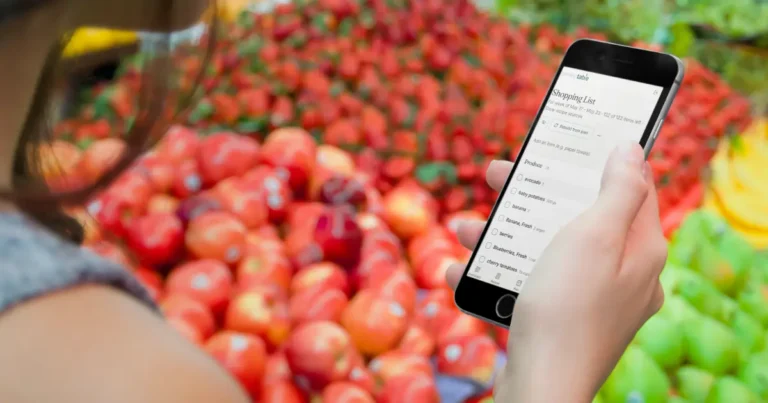
Your grocery store’s app has deals that never make it to the shelf or the weekly flyer. Before I walk into the store, I open the app, browse the sales, and clip the coupons. It takes five minutes, and this week I saved $65 off our trip.
While you’re in there, look at their grocery pickup option. You order from your phone, pull up, and load your car. No impulse buys, no wandering, no leaving without the tomatoes. You also see the total before you commit, which makes sticking to a budget a lot easier.
Buy Private Label
Store brands can save you up to 30% on your grocery bill. Start with the basics: canned goods, dairy, frozen vegetables. A bag of store brand peas is usually half the price of the name brand, and nobody at my table has noticed the difference.
Shop Seasonally
Produce that’s in season costs less. Berries in summer, squash in fall, citrus in winter. Plan your meals around what’s available and your produce costs drop. A simple produce chart on your fridge or inside a cabinet door keeps it front of mind.
Freeze What You Don’t Use
The USDA estimates we throw away about 31% of our food every year. Nearly a third of your grocery budget is going straight in the trash. Before produce goes bad, freeze it. Spinach, berries, celery, and apples all freeze well and work great in smoothies. That’s money you already spent. Stop throwing it away.
Make a Plan
You already know what happens without one. You run in for tomatoes and walk out $100 later without the tomatoes. I’ve done it more times than I want to admit. The layout, the endcaps, the displays are all working against you from the moment you walk in, and they’re good at it.
A meal plan changes the whole trip. When you know what you’re making, you know what you need, and that list becomes a filter for everything else. I use Weekly Table to plan our weekly meals, and it automatically builds a shopping list organized by store section, so I’m not zigzagging back to produce because I forgot something. If making meal planning a weekly habit is the part you’re stuck on, these small shifts help.
Track Your Spending
Pick one method and use it every single month. Save your receipts and add them up, use a budgeting app, take a photo of every receipt. It doesn’t matter which one you choose. That number changes how you shop the next month.
Set a Grocery Budget Goal
Once you know what you’re spending, pick a target. For a long time we didn’t have a number we were aiming for, and once we set one, our shopping changed. You make different decisions when you know your number.
The Steps I Used to Save $350 in One Month
I looked at two months of grocery spending and threw out a number. $400.
My goal was to spend $400 less on groceries the next month. My heart beat a little fast when I said it out loud.
I’d tracked our finances for years. I knew what we were spending, and one day I just wanted to know if we could do better. I wanted to prove it was possible.
A new month, new rules. No last-minute store runs, no quick trips for one thing, shop off a list and nothing extra.
Then came meal planning. I already knew it worked. I also knew it took forever, which is exactly why I skipped it most weeks. Sifting through recipes, figuring out what sounded good, what we had ingredients for, what was realistic for that week, it could eat up an hour before I even had a full week planned. But I had a goal, and that goal was the reason I sat down and did it anyway.
I cut the box store completely. One list, one shop, one week, nothing extra.
And then I found Aldi. I walked in not expecting much. I stood in the produce aisle and did a double take at the prices. Peppers, greens, berries, all of it affordable and actually good. I felt a little annoyed it took me this long to walk through that door.
I’d avoided Aldi for years. Not because of the prices or selection, but the cart. The quarter to unlock the cart had me convinced I was going to walk up, not be able to unlock it, and stand there looking like I’d never grocery shopped a day in my life. What if it didn’t work? What if I held up the whole line figuring it out? So I just didn’t go.
During that month I shopped alone as much as possible. When it was just me, the list ran the trip. When someone came along, suddenly there were opinions about dinner and things we needed to try. I love my family, but this I needed to do alone.
At the end of the month I landed at $350, not $400. I wasn’t disappointed for a single second. It was proof that a clear goal and a weekly plan are enough to change what you spend.
Your Turn
You don’t have to do all of this at once. I didn’t save $350 by doing everything at once. Pick two or three of these and stay consistent for a full month, then look at what went well and what you’d do differently. Set your goal for next month and go again.
Weekly Table builds your grocery list automatically, sorted by category with duplicates already combined. Start with a free 14-day trial.