
We’ve all been there: you walk into the grocery store with a vague idea of getting food for the week, and 45 minutes later, you’re standing at the checkout line with a cart full of artisan cheese, three types of kale you won’t actually cook, and a total that makes your heart skip a beat.
I have been guilty of walking into the grocery store and falling for all of the food that just sounds so good… and then getting home and not actually having the ingredients to put together a meal. (This is where girl dinner comes in handy, anyone else?)
When it comes to building a grocery list, it feels like something that could be done in a matter of minutes and without much research. After all, it’s just finding the ingredients you don’t need. Right?
The best grocery lists require focus on what you can actually make to feed you and your family. And, if you’re feeling the pain of the increasing costs of groceries, it becomes a little bit more strategic. To keep the costs down, I want to find recipes that have a low number of ingredients, but also have common ingredients that I can share across multiple dishes for the week. And, to make things even harder, I want them to have unique flavors so it doesn’t feel like I’m punishing myself with the same meal over and over and over again.
So as you think about how to build a grocery list, check out these quick hacks that have helped us save 30% on our grocery bills each month and fit the tough checklist of making meals easy to make and fun to eat. (We’re not picky at all, are we?)
Step 1: Eat a Snack First
I am totally serious on this one! Just like walking into the grocery store on an empty stomach; building a grocery list without any fuel means you’ll be turning your daydreams of yummy food into your actual list – and find that it grows without having the ingredients you need to make the meals you need to fuel yourself.
Step 2: Build Your Plan
Whether you opt for a simple and easy digital meal planning system or to make your plan on paper, this is the first place to start. After all, fail to plan – plan to fail?
Many people will do plans for one or two weeks, and I know a few that will plan for the entire month. It comes down to what works best for you and your family. Build your plan, keeping in mind how life may contribute to what meals are reasonable.
With your plan in place, you can start to think about how to build your grocery list.
Step 3: Build the Grocery List
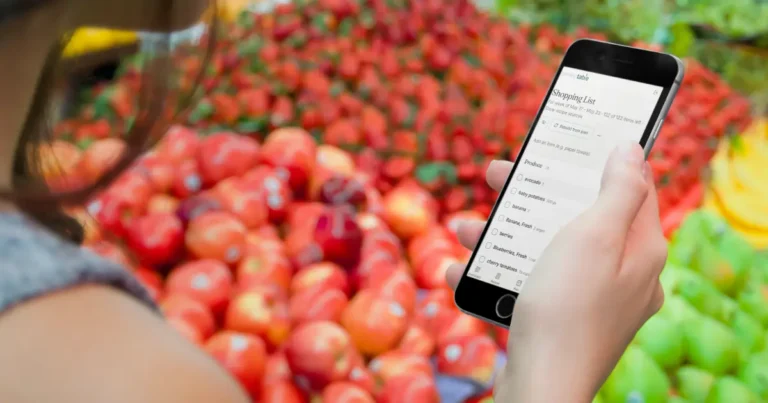
Now, with a digital meal planning system like Weekly Table, the system does all of the work for you.
- Looks at your recipes and identifies ingredients
- Puts all of the ingredients on a list
- Organizes your ingredients into a list
This takes a matter of seconds. If you are doing the paper method, this may take some extra time as it requires going through each recipe and listing out what the ingredients may be. And then, taking some extra time to organize it like how you would shop the grocery store (this streamlines things… and helps to prevent those impulse buys, too!)
Step 4: Check Your Pantry
Before you finalize your grocery list, take a look at what you have in your pantry and mark it off. The other night, I was in the midst of making bread and made a mental note that I needed to put more flour on the list – without even looking at what I had in the pantry. Once I looked, I had more than half a bag left which filled my flour container to the top.
Knowing what’s in your pantry can save costs and prevent food waste. Like with the flour, I was convinced I had used the last of it – and completely forgot that I had some waiting to be used. Your pantry becomes your first stop on the grocery list, and helps to cut down on buying too many of one ingredient.
Step 5: Head to the Grocery Store
I highly recommend eating a snack before going to the grocery store, too. Personally, my grocery cart gets quite creative when I’m hungry because everything sounds so good.
At the grocery store, your organized list becomes your blueprint for how to walk about the store. It makes it super easy to check things off fast, limiting your time in the store (an added bonus given everyone’s busy schedules!); and it means that you don’t get distracted by a “hmm I wonder if this would work for Tuesday night…”
While you’re at the grocery store, there are a few things to look at that may help you reduce costs:
- Look at the bulk section for spices, nuts, and other ingredients that you may only need a small amount for the week
- Consider frozen veggies – the texture may be different, but they are just as nutritious as fresh (and stay longer!)
- Check out coupons, including the grocery store preferred shopper program (one local to me will also give you discounts on gas!)
Step 6: Cook to the Plan
Sometimes life gets in the way and means that the plan goes out the window when someone gets sick or there’s a schedule change. But, once you have your groceries in the house, the plan just needs to be executed – the easiest and often, most enjoyable part of the meal planning process.
However, if life does get in the way, and you can’t get to the ingredients that you thought you needed – look at whether you can freeze it. Spinach for a salad? Pop it in the freezer and use it in smoothies. Don’t need leftovers? Cook the recipe as is, and put what would’ve been leftovers in the freezer to use in a clutch on a busy day.
Let’s Do This: Build a Grocery List for Your Life & Your Wallet
Recent data from CBS News show that grocery costs have risen by about 20% over the last four years. Depending on the specific ingredients that you’re buying, it may feel like this is hitting your wallet even harder.
While it’s hard to control the increasing grocery costs, there is one thing you can control in your kitchen: How you plan and prepare for the buying the ingredients you need for your meals. Data consistently shows that meal planning lowers your grocery costs, and can do so by up to nearly 30%. (Ready how our co-founder cut her grocery bill by 30% with Weekly Table!)
As the old adage says, fail to plan and plan to fail. Take control of your grocery budget and food logistics with a plan – helping to make the checkout less painful.
Ready to cut your grocery bills by 30%? Sign up for Weekly Table.