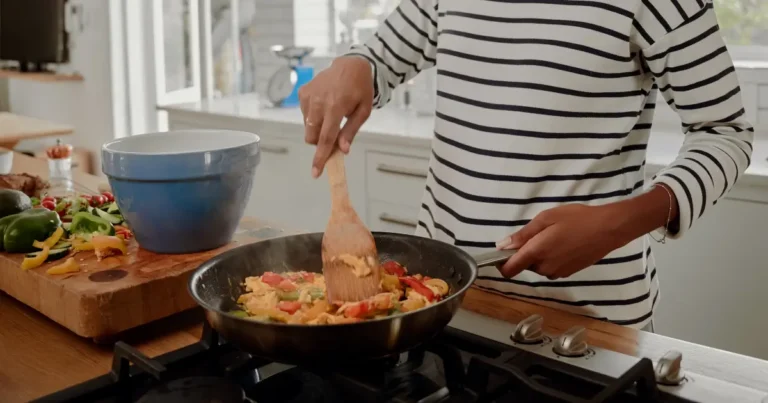
It’s 4:30 and there’s nothing planned for dinner. You told yourself this week would be different. Maybe you even wrote a few things down on Sunday. But somewhere between school drop-off and the appointment you completely forgot about, it slipped, and now you’re standing in the kitchen trying to decide between frozen pizza, going out, or just grabbing whatever snacks are within reach and calling it a night.
I know that feeling. I’ve had that night more times than I’d like to admit. I started meal prepping on Sundays about five years ago and I still don’t do it perfectly. Some weeks I get a ton done and some weeks a pot of rice is the whole win, and I’m okay with that, because that pot of rice is exactly what’s already there waiting for me on the night I walk in and can’t face cooking.
If meal planning has never stuck for you, here’s what I want you to know before anything else, you didn’t fail at it. You just started without building the habit first, and nobody told you that part mattered.
I learned this the hard way with a workout program I started earlier this year. I watched all the videos, joined the monthly challenge, felt super excited. The first week was great. Then week two arrived and my brain started making excuses: you’re sore, you worked hard yesterday, one day off is fine. I let it win, and then let it win again, and by week three I’d quietly quit without ever really admitting it to myself. It wasn’t that I didn’t care. It was that I tried to do everything at once before any of it felt normal, and my brain just went back to what it already knew.
Meal planning does the exact same thing.
Your System Has To Fit Your Life
James Clear puts it perfectly in his book Atomic Habits:
“You do not rise to the level of your goals. You fall to the level of your systems”
I think about that a lot when it comes to dinner. “I want a real meal on the table by six every night” is a great goal, but without a simple structure underneath it, your brain has nothing to return to when the day gets hard. And, the day will always get hard. That’s exactly when your system has to work.
Most meal planning advice tells you to sit down on Sunday, plan the whole week, write the grocery list, maybe even prep. If you’re just starting out, that’s too much at once. You don’t need a bigger plan. You need a smaller one you’ll actually do, and then do again.
Here’s what five years of Sundays taught me: you have to count on the fact that some nights you will come home and not want to cook. That’s not a failure, that’s just Tuesday. The goal isn’t to want to cook every night. The goal is to have something already there waiting for you when you don’t, and the way you get there is one small habit at a time.
When I started doubling my rice so I had lunch covered for the next two days, or throwing extra meat on the grill so Wednesday night wasn’t starting from scratch, those hard nights stopped feeling like a crisis. When I walked in that Wednesday night and dinner was basically already done, it was just relief. No rushing, no scrambling, just one less thing on my mind.
That feeling is what keeps the habit going. But you don’t get there by going all in. You get there by doing one small thing and feeling the difference it makes. It doesn’t have to be big to work. Here’s where to start.
A Step-By-Step Meal Planning Start Plan
Step 1: Build your recipe collection
This week your only job is to save recipes. Pick one small window each day and add three to five. Waiting at school pickup, open Weekly Table on your phone. Kids watching a show after dinner, add a couple. That’s it. Repeat this until saving recipes feels like the most natural thing in the world, and then move to step two.
Step 2: Generate your meal plan
Once saving recipes feels automatic, add the next habit. After you save a recipe, head to the meal planner and generate your week. In under thirty seconds your week is planned and 4:30 stops being a crisis. Do this a few times until it feels like a normal part of your week.
Step 3: Pull your shopping list
After your week is planned, open your shopping list. Every ingredient from every meal is already there. You’re not building a list from memory, you’re just looking it over and walking out the door.
The women who have this figured out aren’t more organized than you and they don’t have more free time on Sundays. They just let it grow slowly enough that it actually stuck, and now when Sunday rolls around they feel something pull at them to get at least one thing done, because they know what that one thing is worth on a Wednesday night.
Ready to check out the Weekly Table? Get started for free!